 Premier League
  La Liga
  Serie A
  Bundesliga
  Ligue 1
 Spain defeated Argentina 1-0 after extra time at MetLife Stadium on 20 July 2026, with Ferran Torres’s 106th-minute finish settling the contest and delivering Spain their second World Cup title, sixteen years after their triumph in South Africa.
🔥 Quick Read
- Spain win 2026 World Cup, defeating Argentina 1-0
- Torres scored as a 62nd-minute substitute in the 106th minute
- Emiliano Martínez made a World Cup final record 11 saves
- Enzo Fernández sent off in the 90th minute for a second yellow
- Spain’s first World Cup title since 2010
Spain Outlast a Defiant Argentina in Extra Time
Spain dominated from the outset, creating chances in volume while Argentina compact and disciplined offered almost nothing in attack, relying entirely on goalkeeper Emiliano Martínez, whose eleven saves across the match set a World Cup final record.
Argentina registered no shots in the first ninety minutes as Spain peppered their defence without reward, keeping the scoreline level deep into stoppage time.
The match turned irrevocably in the 90th minute when Enzo Fernández was shown a second yellow card for a reckless foul on Pau Cubarsí, reducing Argentina to ten men heading into extra time. Scaloni responded by shifting to a back five, clearly gambling on reaching penalties, but Spain’s attacking weight grew heavier with every passing minute.
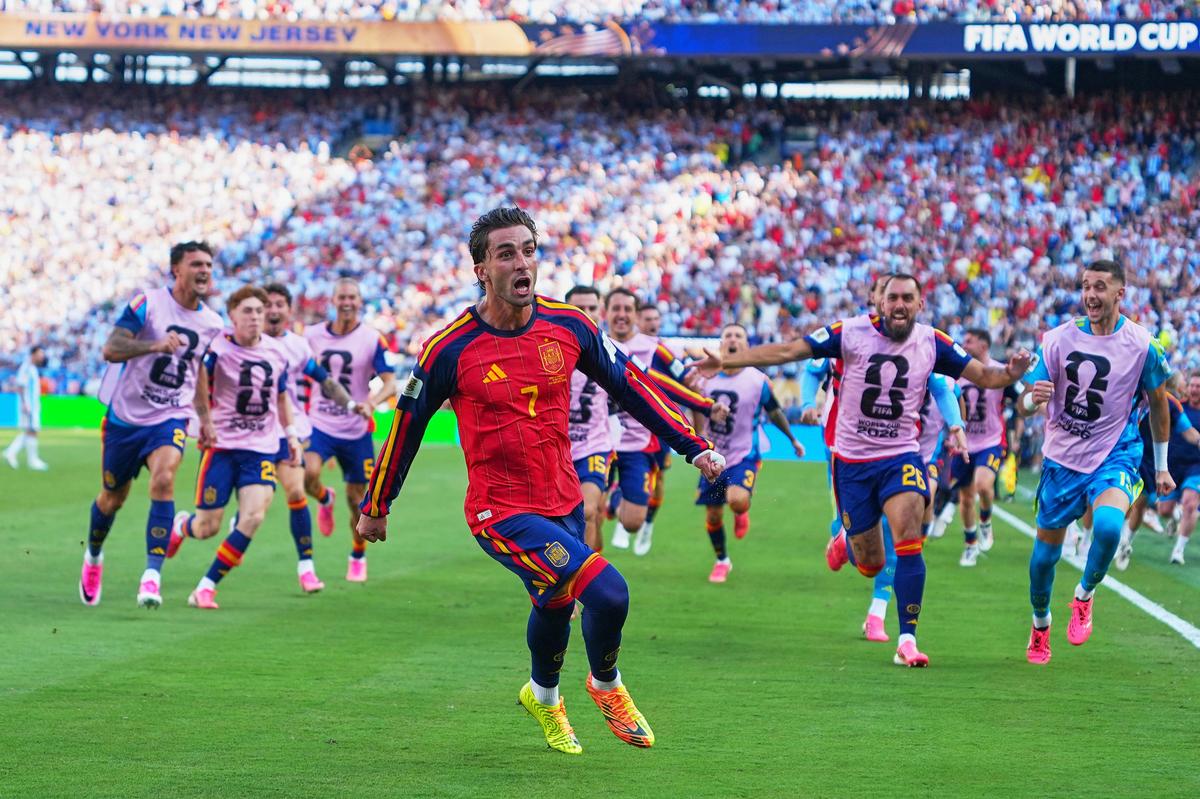
Thirty-nine seconds into the second half of extra time, Pedro Porro lifted the ball to the far post, Nico Williams beat his marker to the header and laid it back, and Torres introduced as a substitute in the 62nd minute, hammered home from close range to make it 1-0. Argentina chased an equaliser in the final minutes but could not breach Spain’s defence.
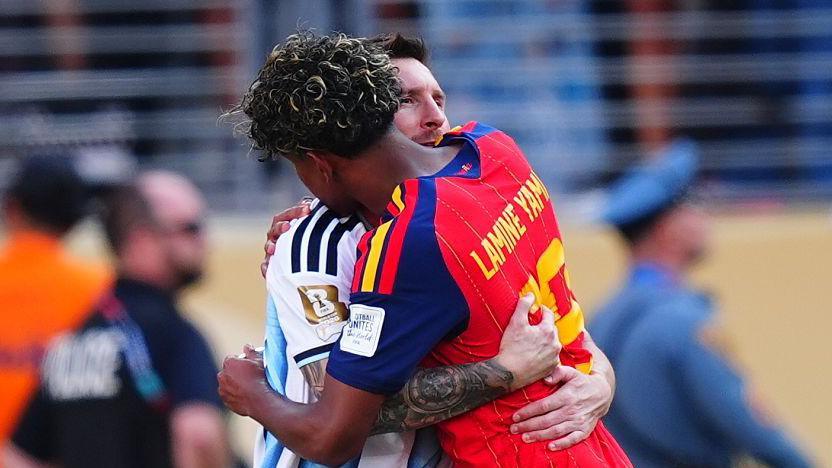
Fernández Red Card, Then Torres Delivers the Blow
Enzo Fernández’s second yellow card in the 90th minute for fouling Pau Cubarsí changed the shape of the contest, leaving Argentina a man short for the full duration of extra time.
Emiliano Martínez had kept the tie alive almost single-handedly, setting a World Cup final saves record with eleven stops, but in the 106th minute Nico Williams’s header from Porro’s cross found Torres, who finished first time to settle the match. Argentina pushed for a late equaliser but could not test Spain’s goalkeeper sufficiently.
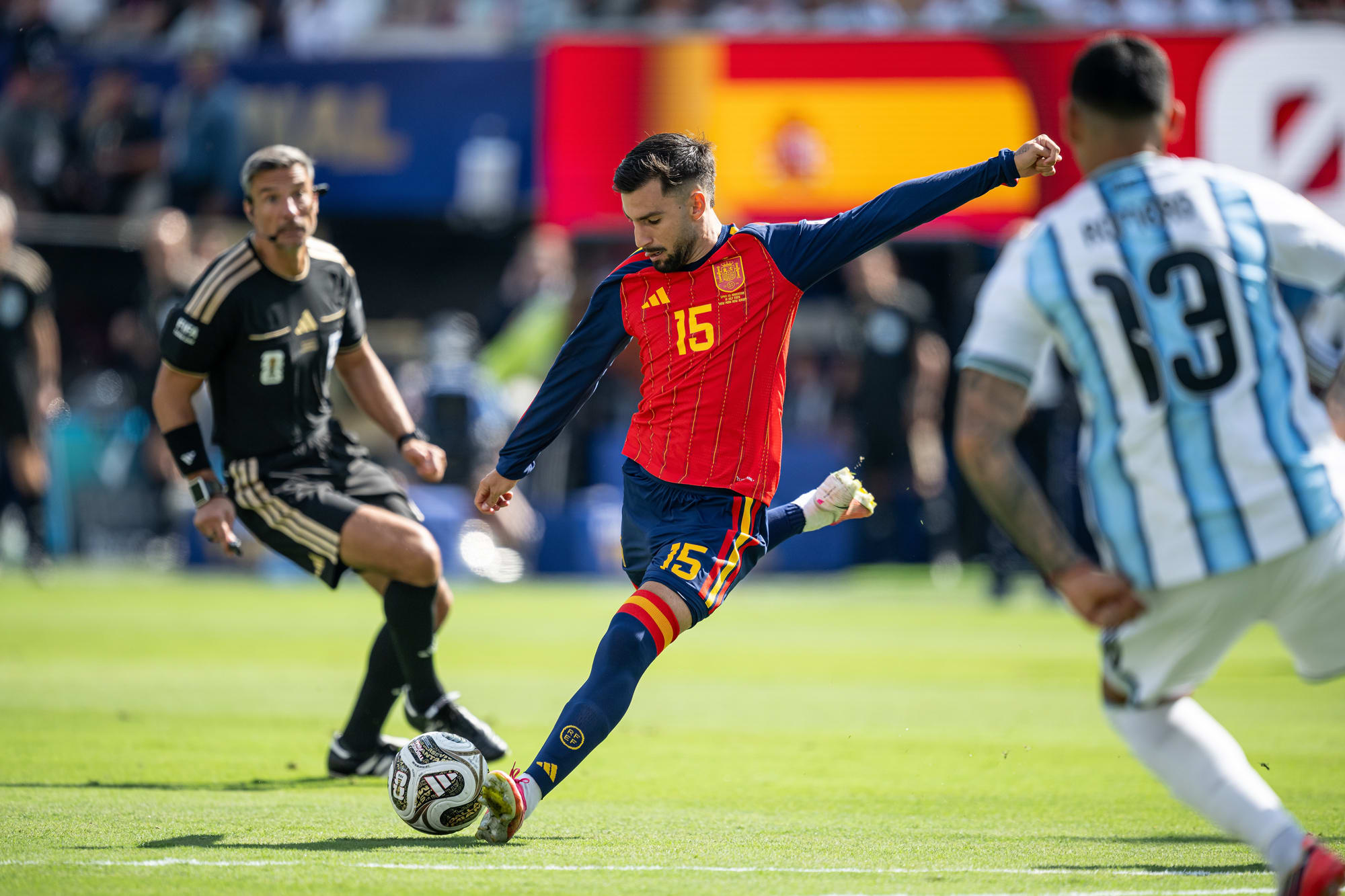
Emiliano Martínez: Record-Breaking, Yet Beaten
Emiliano Martínez was named the match’s top-rated player, and the statistics supported it: his eleven saves broke the previous record for a World Cup final, and without him Argentina would have been beaten long before extra time. He was the sole reason the match reached 90 minutes level.
When Torres’s first-time strike arrived in the 106th minute, Martínez had already committed to the cross and could do nothing, an ending that underscores how fine the margins were in a final that was ultimately far more one-sided in terms of chances than the scoreline suggested.
Scaloni Concedes Spain Were Better; Messi Era at a Crossroads
Lionel Scaloni acknowledged after the final whistle that Spain had been the superior side on the day. His decision to withdraw a forward and switch to a back five in extra time showed Argentina had shifted their aim to penalties, a gamble that never paid off after Torres struck.
The multiple yellow cards accumulated by Argentina, six players booked across the match will have no bearing on a tournament that has now concluded, but the overall picture is a squad that ran out of answers against a side that controlled the ball and the space for long stretches.
For Spain, Luis de la Fuente’s side completed the tournament unbeaten, winning their second World Cup title and positioning themselves as favourites heading into the 2030 cycle.
For Argentina, the defeat ends a four-year run that had included Copa América 2021, the 2022 World Cup, and Copa América 2024, the bid to become the first team since Brazil in 1962 to win back-to-back World Cups fell at the final hurdle. Lionel Messi, 39, has indicated this was his final World Cup.
Spain’s players and staff collect the trophy at MetLife Stadium; their attention will now turn to the 2030 World Cup cycle, where they begin as reigning world champions.