The opening match of the 2006 FIFA World Cup saw host nation Germany defeat Costa Rica 4-2. The game not only marked the beginning of Germany’s World Cup campaign but also produced two unforgettable moments.
The first was Philipp Lahm’s stunning curling strike from the left side, a goal that bent beautifully into the top corner and remains one of the most iconic goals in German World Cup history. The second unforgettable moment belonged to Torsten Frings.
During the match, Frings received a pass from Bastian Schweinsteiger outside the box and unleashed a powerful long-range shot. The ball flew into the net like a rocket, combining incredible speed and power.
Even with a full-stretch save attempt, the goalkeeper had no chance. That thunderous strike introduced the football world to the name “Frings.”

From Striker to Complete Midfielder
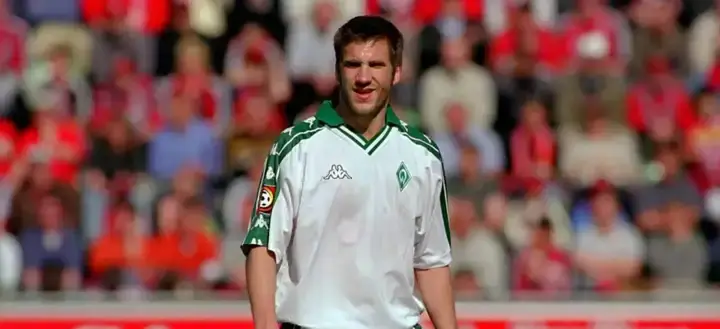
Many younger fans may not know that Frings originally started his career as a forward. During his early days at Alemannia Aachen, he showed decent scoring ability.
However, after joining Werder Bremen, his coaches recognized his physical strength, tactical awareness, and defensive instincts. He was gradually transformed into a midfielder, a decision that completely changed his career.
In his early years as a midfielder, Frings was still attack-minded. He loved making late runs into the box and taking long-range shots, where his famous, powerful shooting ability began to develop.
After several seasons of growth, he became the midfield core of Werder Bremen. In the 2001-02 season, he finished as the club’s top assist provider and was selected into the Bundesliga Team of the Season, officially establishing himself as one of Germany’s top midfielders.
Dortmund and Bayern: Injuries Changed His Career Path
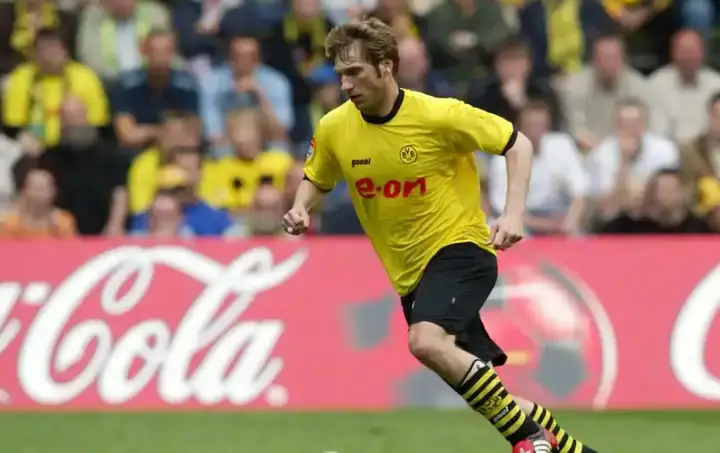
Frings later joined Borussia Dortmund, where he played alongside stars such as Tomáš Rosický. At Dortmund, his role became more defensive.
However, when Rosický struggled with injuries, head coach Matthias Sammer pushed Frings further forward into a playmaking role. Frings responded brilliantly, contributing 6 goals and 9 assists, proving he was much more than just a defensive midfielder.
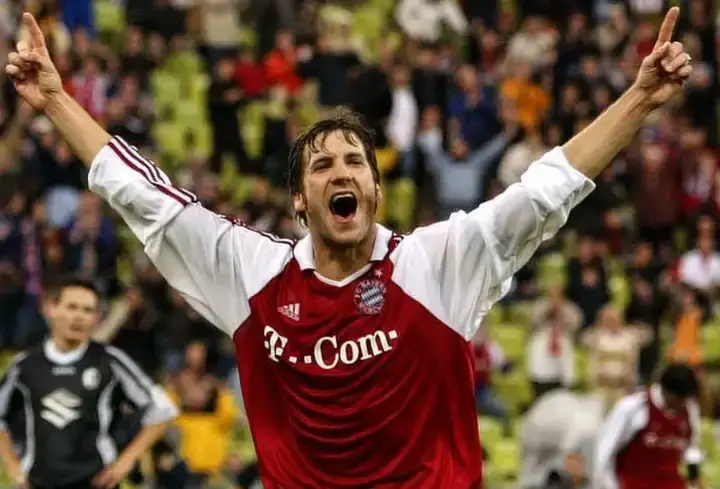
In 2004, Frings transferred to Bayern Munich, but the move proved disappointing. A serious cruciate ligament injury had already reduced his mobility and defensive coverage.
Under Felix Magath’s demanding high-intensity system, Frings struggled to secure a place in the squad. After just one season, he decided to return to Werder Bremen, a move that ultimately revived his career.

A Complete Yet Underrated Midfielder
Back at Bremen, Frings regained his status as the team’s central figure. With greater attacking freedom, he delivered 5 goals and 11 assists in a highly impressive season. His consistent performances secured his place in the German national team setup, where he played important roles during the 2006 World Cup and UEFA Euro 2008.
Frings may never have received the same spotlight as Michael Ballack or the popularity of Schweinsteiger, but he was an essential piece of Germany’s midfield structure.
He could organize play, defend, shoot from distance, and perform in multiple positions. Whether as a wide midfielder, attacking midfielder, or defensive midfielder, he consistently delivered reliable performances.
A Talented Midfielder Limited by Injuries
Without his major injuries, Frings could arguably have reached an even greater level in world football.
The cruciate ligament tear significantly affected his athleticism and limited his career. Even so, he still proved his value at both club and international level through his experience, versatility, and football intelligence.
In 2013, after suffering from persistent hip problems, Frings officially announced his retirement from professional football. Yet for many German football fans, that unforgettable long-range rocket in the 2006 World Cup opener remains the defining image of Torsten Frings’ career.